
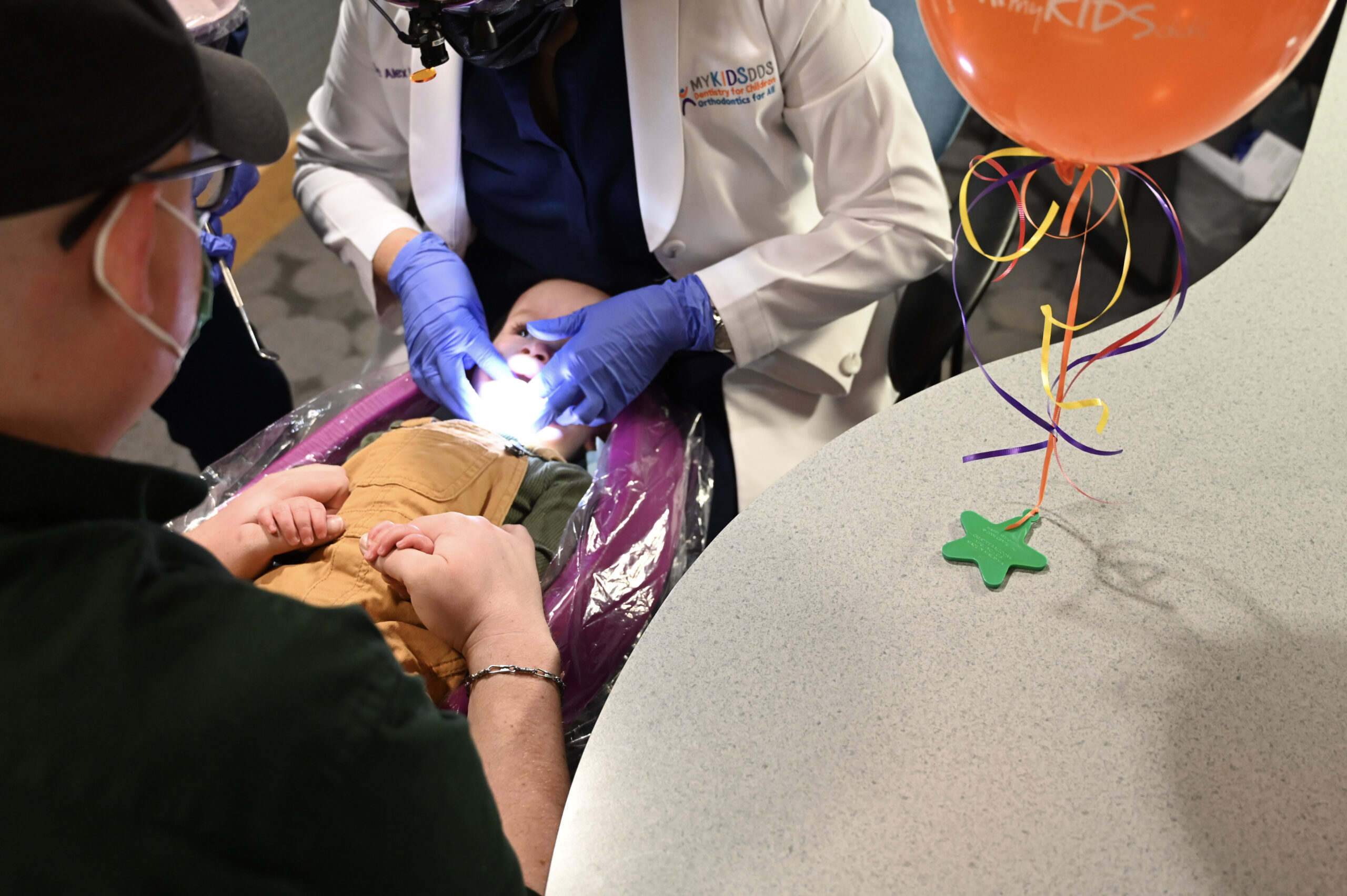
How Tongue-Ties Can Affect Breastfeeding and Bottle-Feeding
Feeding your baby is one of the earliest ways you bond together, so it can feel stressful when breastfeeding or bottle-feeding doesn’t go as smoothly as expected. If your baby struggles with latching, seems frustrated during feeds, or takes a long time to finish a bottle, you may find yourself wondering why.
You’re not alone. Many parents wonder whether a tongue-tie could be affecting their baby’s ability to feed comfortably. This is more common than you might think, and understanding how the tongue works can help you feel more confident about your next steps.
A tongue-tie is not just about how the tongue looks—it is about how well the tongue can move and function. At myKIDSdds, we look at the whole child, considering feeding, oral development, growth, breathing, and long-term wellness.
What Is a Tongue-Tie and Why Does It Matter?
A tongue-tie occurs when the small band of tissue under the tongue (called the frenulum) restricts normal tongue movement. Every baby has this tissue, but in some children it may be tighter, shorter, or thicker than usual, limiting how freely the tongue can move.
The tongue plays an important role in feeding because babies use coordinated tongue movements to create suction, move milk, and swallow effectively. When tongue movement is limited, some babies may have difficulty creating a comfortable latch or maintaining an efficient feeding pattern.
A tongue-tie can affect babies differently. Some infants have a visible tongue-tie but feed comfortably, while others experience challenges that affect daily life. That is why a careful evaluation focuses on function—not appearance alone.
Why This Happens in Kids
Parents often notice tongue tie concerns during the early feeding stages, but signs can vary from child to child.
Some babies with a restrictive tongue-tie may have difficulty with:
- Creating a deep latch during breastfeeding
- Maintaining suction while feeding
- Coordinating sucking, swallowing, and breathing
- Finishing feeds efficiently
- Staying comfortable during nursing or bottle-feeding
Parents may also notice signs such as:
- Clicking sounds during feeding
- Milk leaking from the mouth
- Frequent or prolonged feedings
- Fussiness during meals
- Difficulty gaining weight appropriately
If you are seeing these challenges, it does not mean something is wrong with your parenting or your feeding journey. Many factors can affect feeding, and a supportive evaluation can help identify what may be contributing.
How Oral Health Impacts the Whole Body
The mouth is an important part of your child’s overall development. The tongue helps with feeding in infancy, but it continues to play a role as children grow.
As children get older, tongue movement can influence:
- Eating and managing different food textures
- Speech development
- Oral hygiene habits
- Jaw and facial growth
- Breathing patterns and airway development
Some children with restricted tongue movement may experience challenges with eating certain foods, keeping the mouth clean, or developing proper tongue posture.
At myKIDSdds, we believe oral health is connected to the whole child. Healthy development involves more than teeth alone—it includes how children breathe, sleep, eat, and grow.
What Parents Should Watch For
It is completely normal for new parents to have questions about feeding. Babies are learning a new skill, and every child develops at their own pace.
You may want to check in with a pediatric dental provider if you notice:
- Your baby consistently struggles with feeding.
- Feeding sessions are very long or exhausting.
- Your baby seems frustrated while eating.
- Bottle nipples collapse frequently during feeds.
- Your child has difficulty moving their tongue freely.
- Older children have challenges with certain foods, speech sounds, or oral habits.
Remember, having a tongue-tie does not automatically mean your child needs treatment. A thorough evaluation helps determine whether the restriction is actually affecting function.
What Is a Frenectomy?
A frenectomy is a procedure that releases a restrictive frenum to improve tongue or lip movement when appropriate.
For babies and children who have functional challenges related to a tongue-tie, a frenectomy may be considered as part of a personalized care plan. The decision is based on your child’s specific needs, feeding concerns, and overall development—not simply the presence of a tongue-tie.
Our team takes time to explain what we see, answer your questions, and help you understand all available options before making decisions about care.
How We Help at myKIDSdds
At myKIDSdds, we take a whole-child approach to pediatric dental care.
Our team considers:
- Your child’s feeding experience
- Tongue function and oral movement
- Growth and development
- Airway and breathing patterns
- Future oral health needs
When appropriate, our pediatric dentists and orthodontic specialists work together to monitor development and create personalized recommendations as your child grows.
We believe early evaluation is about understanding your child—not rushing into treatment. Sometimes the best plan is simply monitoring growth and development while supporting your family with guidance along the way. If treatment is recommended, you can learn more about what to expect during a frenectomy procedure.
Supporting Your Child’s Feeding and Development
If breastfeeding or bottle-feeding has been challenging, you do not have to navigate those questions alone. Many parents are surprised to learn how much the tongue contributes to feeding, oral development, and overall wellness.
A simple evaluation can provide reassurance, answers, and a clearer understanding of what your child needs.
If you have concerns about tongue-tie, feeding difficulties, or your child’s oral development, the team at myKIDSdds is here to help. We welcome your questions and are happy to guide you through the next steps with care and compassion.
Schedule a visit with myKIDSdds to learn more about your child’s unique needs and how we can support their healthy growth.